
Requirements Document
A precise, testable specification of functional and non-functional requirements, each a single verifiable statement with a stable ID, plus acceptance criteria, constraints and scope..
What a Requirements Document is
A Requirements Document is the contract between intent and build. It states, in single verifiable sentences, what a system must do and the qualities it must meet, so designers, engineers, and stakeholders work from one shared definition instead of a hallway conversation.
Every requirement carries a stable ID and is testable on its own. That structure lets acceptance criteria attach to specific lines, lets reviewers sign off on a known list, and keeps scope from drifting once the work begins.
Done well, it is short to read but exact to act on. It separates functional behavior from non-functional qualities like performance and security, records assumptions and constraints, and names what is deliberately out of scope.
The anatomy of a Requirements Document
Overview & objectives
State why the system exists and what success looks like. This frames every requirement that follows and gives reviewers the goal to judge against.
Scope & context
Define the boundary, the users, and the systems it touches. Agreeing on context here prevents arguments later about what was ever in play.
Functional requirements
List what the system must do, each as one verifiable statement with a stable ID. These are the behaviors a tester can confirm or reject without debate.
Non-functional requirements
Capture qualities like performance, security, reliability, and availability. Write them as measurable thresholds so they can be tested rather than assumed.
Acceptance criteria
Spell out exactly how each requirement is verified and what counts as done. This is the line between a finished feature and an ongoing argument.
Assumptions & constraints
Record what the spec depends on and the limits it must respect, such as platforms, budgets, or deadlines. Surfacing these early stops them from becoming surprises.
Out-of-scope
Name what this system will not do, on purpose. An explicit exclusion list is the cheapest defense against scope creep you can write.
Writing requirements that hold up
Do
- Write each requirement as one verifiable statement with a stable ID so it can be traced and tested.
- Separate functional behavior from non-functional qualities like performance, security, and reliability.
- Attach acceptance criteria to each requirement so everyone agrees on what done means.
- State assumptions and constraints openly so dependencies surface before the build, not during it.
- Keep an explicit out-of-scope list to shut down scope creep before work begins.
Avoid
- Don't bundle several behaviors into one requirement, because a half-passing test has nowhere to land.
- Don't write vague non-functional goals like 'fast' without a measurable threshold to verify.
- Don't reuse or shuffle IDs, since a moving target breaks traceability and sign-off.
- Don't leave acceptance criteria implied, or 'done' becomes a matter of opinion.
- Don't omit the out-of-scope section and assume everyone shares the same boundary.
The old way vs. the waxTable way
How Waxe generates your Requirements Document
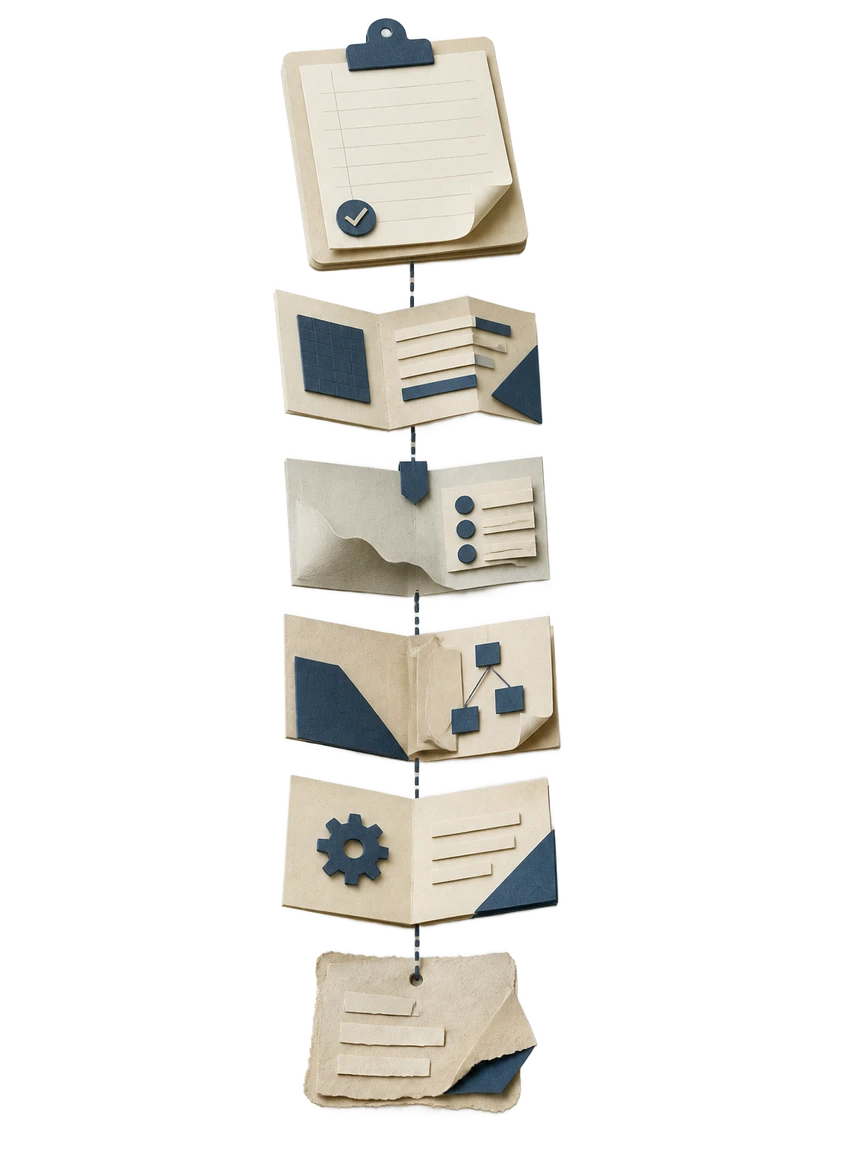
- 1
Describe the system
Tell Waxe what the system is for, who uses it, and the problem it solves. Waxe turns that into the overview and objectives, setting the goal every requirement will be judged against.
- 2
Set the boundary
Waxe drafts scope and context, naming the users and systems involved and where the edges sit. It also writes the out-of-scope list so the boundary is explicit before anyone starts building.
- 3
Draft the requirements
Waxe writes functional and non-functional requirements as single verifiable statements, each with a stable ID. Functional behavior and qualities like performance and security land in their own sections, ready to test.
- 4
Attach acceptance criteria
For each requirement, Waxe drafts acceptance criteria that define exactly how it is verified and what counts as done. It also records the assumptions and constraints the spec depends on, so dependencies are on the page.
- 5
Review and share
You edit any line directly in the workspace, adjusting requirements, criteria, or scope as needed. The numbering and structure stay intact, and you share a clean, on-brand Requirements Document in about five minutes for a few cents.
Frequently asked
What is a Requirements Document?
A Requirements Document is a precise, testable specification of what a system must do and how well it must do it. Each functional and non-functional requirement is written as a single verifiable statement carrying a stable ID, so it can be traced, tested, and signed off. It also captures acceptance criteria, assumptions, constraints, and an explicit out-of-scope list. The point is to leave nothing to interpretation between the people who write the spec and the people who build against it.
What goes into a strong Requirements Document?
It opens with overview and objectives, then sets scope and context so everyone agrees on the boundary. The body splits functional requirements from non-functional ones such as performance, security, and reliability. Acceptance criteria define exactly how each requirement is verified, and assumptions and constraints record what the spec depends on. A clear out-of-scope section closes the door on scope creep before the build even starts.
Why give every requirement a stable ID?
A stable ID turns a line of text into something you can point at for the life of the project. It lets a test reference the exact requirement it verifies, lets a change request name what it is changing, and lets a sign-off cover a known list. Without IDs, reviewers argue over which sentence they meant and acceptance becomes guesswork. waxTable assigns and keeps these IDs consistent across the functional and non-functional sections so traceability holds from objective to acceptance criterion.
How does waxTable build the document for my project?
You tell Waxe what the system is for and who it serves, and Waxe drafts a complete Requirements Document with overview, scope, numbered requirements, and acceptance criteria. It separates functional behavior from non-functional qualities and writes each requirement as one verifiable statement. Assumptions, constraints, and an out-of-scope list are filled in so the boundary is explicit. The whole draft takes about five minutes and costs a few cents, then you edit any line directly in the workspace.
Can I change the requirements after Waxe generates them?
Yes. The generated Requirements Document is fully editable in the waxTable workspace, not a locked export. You can rewrite any requirement, add or remove acceptance criteria, adjust the scope boundary, or move an item into the out-of-scope section. Edits keep the document's structure and styling intact, so the numbering and section order stay clean. When the spec is ready you share it as a polished, on-brand document.
Skip the writing — generate the whole requirements document
Waxe drafts it on your brand in about five minutes, then you refine it. From two days of work to a few cents.
Your next requirements document, in five minutes
Tell Waxe about the client and get a complete, on-brand requirements document to review — the work of two days for a few cents. There is no blank page to start from and nothing to format by hand; you answer a short brief, Waxe does the drafting, and you keep full control of the final document in the editor.